Wandsworth Council floral waste rules for Putney residents
Posted on 05/11/2026
Wandsworth Council Floral Waste Rules for Putney Residents: A Practical Guide
If you live in Putney, you may have found yourself staring at a pile of spent stems, wilted leaves, torn wrapping and broken plant pots and wondering what on earth counts as floral waste. The rules can feel fiddly, especially when you are trying to do the right thing without filling the wrong bin. This guide on Wandsworth Council floral waste rules for Putney residents breaks it down in plain English, so you can sort bouquet leftovers, garden clippings and event flowers with a bit less guesswork.
You will find a practical explanation of what floral waste usually means in a local household setting, how it is generally handled, what mistakes people make, and how to stay tidy, compliant and sensible. We will also look at where floral waste overlaps with green waste, mixed recycling and general rubbish, because that is usually where the confusion starts. To be fair, it is rarely the flowers themselves that are the problem. It is the bits around them.
For readers looking for related flower care and buying guidance, you may also find our flower care advice useful, especially if you want to make arrangements last longer before they become waste in the first place.
- Why the rules matter
- How floral waste is usually handled
- Key benefits and practical advantages
- Who needs this guidance
- Step-by-step disposal guidance
- Expert tips for better results
- Common mistakes to avoid
- Tools, resources and recommendations
- Law, compliance and best practice
- Options, methods and comparison
- Case study or real-world example
- Practical checklist
- Conclusion
- Frequently asked questions

Why Wandsworth Council floral waste rules for Putney residents Matters
Floral waste is one of those everyday waste streams that looks simple until you try to throw it away. A bunch of roses, for example, may seem like one item, but in reality it can include flower heads, stems, tape, wire, cellophane, ribbon, cardboard sleeves and even water tubes. Once those materials are mixed together, the disposal route changes. That is why knowing the Wandsworth Council floral waste rules for Putney residents matters more than it might first appear.
The practical issue is separation. Organic material such as petals and stems is usually handled very differently from plastic wrap or florist foam. If you put everything into one bin without thinking, you may contaminate recycling or create avoidable mess in your general waste. Nobody wants that, least of all the person trying to lift the bin bag on a wet Tuesday morning. We have all been there.
It also matters because Putney households often deal with more than the odd supermarket bouquet. Think birthdays, sympathy flowers, weddings, school events, church decorations, and seasonal arrangements. Each of those can produce a slightly different mix of waste. The earlier you understand the likely disposal route, the easier it becomes to keep things tidy and avoid last-minute bin-day panic.
Practical takeaway: treat floral waste as a mixed material unless you have separated out the natural plant parts. Natural stems and petals are not the same thing as ribbon, cellophane or foam, and that distinction is usually what the disposal decision turns on.
There is also a broader environmental reason. Flowers are biodegradable, but only when the waste is handled in the right stream. Mixed materials can stop that from happening. So even if you are just clearing a vase after a dinner party, a small amount of care goes a long way. Quietly, it adds up.
How Wandsworth Council floral waste rules for Putney residents Works
At a simple level, floral waste is handled by asking three questions: is it organic, is it recyclable, and is it mixed with anything that changes the disposal method? That is the basic logic you can apply at home. Fresh flowers, leaves and stems are usually treated differently from packaging, floristry accessories and anything synthetic.
In practice, Putney residents tend to deal with floral waste in one of four ways:
- General waste: for mixed or contaminated items that cannot be separated cleanly.
- Food or garden-style organic waste: where local collection arrangements allow suitable plant material and the material is clean and acceptable.
- Recycling: only for clean packaging components that meet the recycling rules for that material.
- Reuse or home composting: where flowers and stems are suitable and the household has a practical system for it.
The difficult bit is that the right route depends on composition, not just appearance. A pretty bouquet may be made up of compostable plant matter, but once it is wrapped in film and bound with florist tape it becomes a mixed waste item. Similarly, a funeral tribute may contain oasis foam, pins and backing materials that are not suitable for organic disposal. There is no single answer for every arrangement. That is a bit annoying, yes, but it is the honest answer.
If you buy flowers regularly, the packaging type matters too. Some stems arrive in paper sleeves, some in plastic wrap, and some in boxes with inserts. If you are making repeat purchases for home, office or events, it helps to look at the presentation style as well as the flowers themselves. For local browsing, the range at flower shops in Putney gives you a sense of how different arrangements are packaged and how that may affect disposal later.
One useful habit is to unpack flowers as soon as they arrive. The longer mixed materials sit together, the harder they are to sort. Damp paper, crushed leaves and sticky tape tend to cling to everything. And suddenly what looked like a quick tidy-up becomes a small post-party excavation. Not ideal.
Key Benefits and Practical Advantages
Following the Wandsworth Council floral waste rules for Putney residents is not just about avoiding a mistake. It actually makes day-to-day life easier. The benefits are practical, small, and real.
- Cleaner bins: segregating floral waste reduces smells, leaks and loose debris.
- Less contamination: clean recycling stays cleaner when non-recyclable flower packaging is removed first.
- Faster tidying: once you have a routine, clearing arrangements takes minutes, not guesswork.
- Better sustainability: natural materials are more likely to be handled appropriately when separated properly.
- Fewer collection issues: the right waste in the right bin is usually the easiest route to smooth collection days.
There is also a subtle but important domestic benefit: less clutter. A vase of fading blooms, a pile of wrappers on the counter and a leaking bag of stems can make a kitchen feel untidy very quickly. If you manage floral waste promptly, the whole room feels calmer. You will notice that on a Sunday evening when the light starts fading and the house needs to reset for the week.
For people who send flowers often, buying from a florist with clearer packaging and care instructions can also help. If you want arrangements that are easy to manage and generally straightforward to dispose of after use, explore the local selection of best flower delivery in Putney options and look carefully at the format of the bouquet or gift item.
And honestly, a tidy waste routine is one of those little habits that pays you back every time. Nothing glamorous. Just less faff. Which, let's face it, is a benefit in itself.
Who This Is For and When It Makes Sense
This guidance is for a wide range of Putney residents, not just keen gardeners or flower lovers. If you receive, buy, arrange or clear flowers at home, it probably applies to you. The most common groups include:
- Households with regular bouquet deliveries
- People arranging birthdays, anniversaries or family celebrations
- Residents handling sympathy flowers after a funeral or memorial service
- Flat sharers sharing communal bins and trying to avoid confusion
- Home composters who want to know what can and cannot go into the heap
- Small businesses or home-based sellers dealing with floral packaging
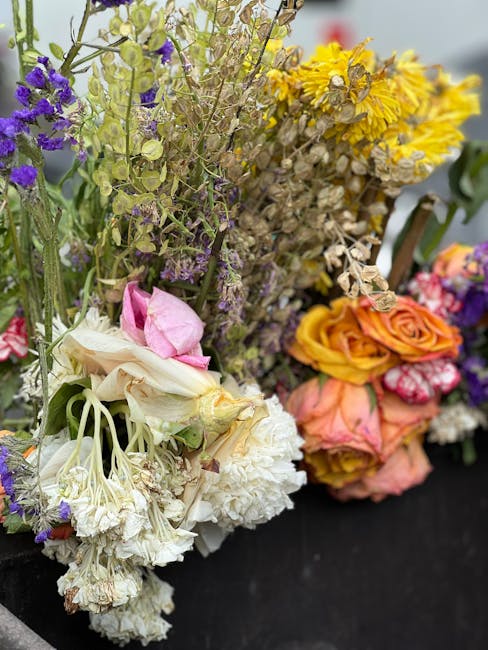
The rules make particular sense after events. If you have hosted a birthday tea, a wedding at home, or even just a long weekend gathering, there is often a surprising amount of floral debris left behind. Heads, stems, trailing ribbon, wrapping, table petals, water-soaked tissue paper. It adds up quickly.
They also matter when flowers are connected to emotion. After a funeral, for example, people may not feel like sorting waste carefully, yet the volume of floral tributes can be significant. In those moments, having a simple disposal plan can make a practical difference. If you need suitable tribute or sympathy options for future occasions, the dedicated range of funeral flowers in Putney may be helpful to review in advance.
When does this guidance make the most sense? In short: whenever floral waste is more than a single stem or two. Once there are mixed materials involved, a quick sort is worth the effort.
Step-by-Step Guidance
Here is a clear way to handle floral waste at home without overthinking it. Keep it simple and work from the top down.
- Separate the natural plant matter. Remove flowers, leaves and stems from the wrapping and accessories.
- Check for mixed materials. Look for plastic film, foam, wire, ribbon, labels, pins, tape and cardboard inserts.
- Sort clean packaging. Paper sleeves, card and clear packaging may have different disposal routes from the flowers themselves.
- Decide whether any plant material is suitable for composting or organic disposal. This usually depends on local collection arrangements and whether the material is clean.
- Bag or bin the remainder responsibly. If in doubt, place contaminated mixed waste in the general waste stream rather than guessing.
- Wipe out vases and containers. A quick rinse helps avoid smells and sticky residue.
- Store reusable items separately. Vases, ribbons and decorative holders are often worth keeping for reuse.
A tiny example helps. Say you have a supermarket bouquet that has faded after a week on the dining table. The flowers and stems may be fine as organic waste or home-compost material if suitable, but the plastic sleeve, elastic band and water tube will need separate treatment. If the bouquet includes glittered ribbon or foam, that complicates things further. So you work item by item. It sounds fiddly, but in practice it takes only a few minutes.
If you send flowers regularly and want options that suit repeat gifting, the convenience of send flowers in Putney services can help, especially if you prefer arrangements that arrive neatly presented and easier to break down afterwards.
One good rule of thumb: if you cannot identify the material quickly, do not force it into a recycling bin. General waste is not ideal, but contamination is usually worse.
Expert Tips for Better Results
Over time, a few habits make floral waste much easier to manage. These are the little things that people who deal with flowers often notice first.
- Unwrap flowers over a sink or newspaper. That way loose petals, damp leaves and small bits are contained from the start.
- Keep a small sorting tray nearby. It gives you a place to put ribbon, tape and wire while you decide what to do with them.
- Use scissors rather than pulling stems apart. It is cleaner and avoids spraying sap or water across the counter. Slightly unglamorous, but effective.
- Reuse good-quality packaging where possible. Card sleeves, gift bags and sturdy paper can often be saved for another occasion.
- Let wet organic material drain before binning it. Excess water creates mess and can make bags split.
- Keep a separate bag for non-recyclables. That includes foam, cellophane and anything with heavy adhesive.
If you are buying flowers for a party or event, ask yourself: will the packaging be easy to sort later? That one question can save you a lot of hassle. The cleaner the arrangement at the start, the simpler the waste process at the end. Truth be told, good disposal often begins before the flowers even reach your home.
Another practical tip is to match the occasion to the arrangement style. For example, hand-tied bouquets usually create less complex waste than highly constructed displays. If you are choosing a present and want something straightforward, browsing birthday flowers in Putney can give you ideas for arrangements that are elegant without being a nightmare to break down later.
And if you keep a small compost caddy or green waste container, line it with care. Torn paper at the bottom, petals on top, no loose plastic floating around. Simple, but it works.
Common Mistakes to Avoid
Most floral waste problems come from a handful of repeat mistakes. Once you know them, they are easy to avoid.
- Mixing flower stems with plastic wrap: This is probably the most common one.
- Assuming all paper is recyclable: Paper that is heavily wet, coated or contaminated may not be suitable.
- Putting foam into organic waste: Floral foam and similar products do not belong with natural plant material.
- Leaving wire and pins in stems: These can cause problems in both composting and recycling streams.
- Forgetting about vases and containers: Glass and ceramics are separate from bouquet waste.
- Overstuffing bins with damp material: This can lead to smells and splitting bags.
There is also a social mistake, if you like: assuming everyone in a shared property understands the same waste rules. In Putney flats and converted houses, communal bins can get confused very quickly if one person throws in mixed floral waste and another person tries to recycle it later. A short note on the fridge or a bin label can save a surprising amount of irritation.
Do not feel bad if you have gotten it wrong before. Most people have. The point is not perfection. It is making the next disposal round easier than the last one.
Tools, Resources and Recommendations
You do not need much equipment to deal with floral waste properly, but a few simple tools help a lot.
| Tool or item | Why it helps | Best use |
|---|---|---|
| Kitchen scissors | Makes stem and ribbon separation cleaner | Cutting flowers from binding materials |
| Small sorting tray | Keeps mixed materials together while you sort | Unwrapping bouquets and event flowers |
| Paper bag or spare liner | Useful for dry, light organic waste | Temporary storage before bin day |
| Reusable container | Helps hold ribbon, wire and accessories | Separating non-organic pieces |
| Cleaning cloth | Stops sticky residue in vases and holders | Final tidy-up after flowers are removed |
For many households, the most useful resource is a simple routine rather than a product. Put the flowers somewhere central, sort them once, and put the waste streams in separate places right away. That keeps the kitchen from becoming a staging area.
If you are choosing flowers with a mind to longer enjoyment and less waste, the cheap flowers in Putney selection can be useful for value-conscious buyers, while the luxury flowers option may suit occasions where presentation matters more. Either way, the key is to think ahead about wrapping and aftercare.
And yes, a washing-up bowl under the vase helps more than you would think. Small domestic miracle, that.
Law, Compliance, Standards, or Best Practice
When discussing floral waste, the safest way to approach compliance is to stick to general UK waste principles and local collection practice rather than guessing details. The broad best-practice approach is straightforward: separate waste by material, avoid contaminating recycling, and use the collection route that matches the item type.
For households, the main compliance issue is usually correct sorting rather than anything criminal or high-risk. Floral waste rarely involves complicated legal obligations on its own, but if it is part of a business, event venue, or commercial premises, duty of care around waste handling becomes more relevant. In that setting, mixed waste, contaminated recyclables and excess organic material should be managed according to the relevant waste collection arrangements.
Best practice also means thinking carefully about items that are not obvious at first glance. Floral foam, adhesive tape, plastic picks, metal wire and decorative glitter finishes may all require different disposal methods. If you run a business account or regularly arrange flowers for clients, it is worth paying attention to packaging and disposal habits from the outset. You can also look at the wider service information on sustainability and guarantees to understand the standards behind product handling and service expectations.
One caution worth saying plainly: if you are unsure whether an item is compostable, recyclable or general waste, do not guess based on appearance alone. A clean-looking material can still be unsuitable. That little pause before binning can prevent a lot of contamination.
For recurring purchases, it is also sensible to review the retailer's terms and conditions and delivery information so you understand how flowers are supplied, protected and presented. The more you know about the product, the easier it is to manage the waste afterwards.
Options, Methods, or Comparison Table
If you are deciding what to do with floral waste, the simplest comparison is between the main disposal or reuse methods. Each has its own strengths, limits and best-fit situations.
| Method | Best for | Pros | Watch-outs |
|---|---|---|---|
| Home composting | Clean plant matter and simple garden flowers | Low waste, practical, environmentally sensible | Exclude plastics, wire, foam and treated materials |
| Organic collection, where available | Suitable plant-based waste under local rules | Convenient for households with collection access | Check what is accepted and whether contamination is allowed |
| General waste | Mixed or contaminated bouquet waste | Simple and reliable when separation is impossible | Less sustainable, avoid overfilling with wet material |
| Reuse | Ribbons, vases, gift bags, hardy decorative items | Saves money and reduces waste | Only useful for items still in good condition |
In a Putney flat, general waste may be the fallback for mixed floral debris simply because separation space is limited. In a house with a garden, composting may be more realistic. Different households, different solutions. Nothing wrong with that.
For repeat buyers or people who like gifting flowers often, browsing flower delivery in Putney can help you compare formats and choose arrangements that match your disposal preference as well as the occasion.
The best method is not the fanciest one. It is the one you can keep doing without making a mess.
Case Study or Real-World Example
Here is a simple real-world scenario that comes up all the time in Putney.
A resident receives a mixed bouquet for a birthday on Saturday morning. The arrangement includes roses, chrysanthemums, a plastic sleeve, a water tube, ribbon, a card and a small cardboard box. By the following Friday, some stems are still fine, but several flowers have wilted and dropped petals onto the tablecloth.
Instead of dumping everything together, the resident does the following:
- Removes the flowers from the sleeve and separates the card and cardboard.
- Places the stems and petals aside for the suitable organic or general waste route.
- Sets aside the plastic sleeve, water tube and ribbon as non-organic materials.
- Checks the vase, rinses it, and keeps it for reuse.
The whole process takes less than ten minutes, and the kitchen is left clean. That is the best sort of outcome: no drama, no guessing, no overflowing bin. The bouquet looked lovely, did its job, and was handled properly at the end.
Now compare that with the less careful version. Everything goes into one bag, the stems are wet, the plastic sleeve is tangled around the ribbon, and the whole thing smells a bit sour by collection day. Not the end of the world, but messier and less considerate to the waste system. That small difference is exactly why clear floral waste habits are worthwhile.
If the bouquet had been part of a larger celebration, the same approach would still apply. For example, wedding table arrangements often include more decorative components, so they need a closer look. If you are planning a local event, the ranges for wedding flowers in Putney can help you think through both the aesthetic and practical side of the arrangement.
Small details, really. But those are the details that save the headache later.
Practical Checklist
Use this quick checklist whenever you are dealing with floral waste at home:
- Have I separated flowers, stems and leaves from wrapping and accessories?
- Have I removed plastic film, tape, wire, pins and foam?
- Is any paper clean and suitable for recycling, or is it too contaminated?
- Can any plant matter be composted or placed in an organic waste route?
- Have I rinsed the vase or container?
- Have I kept reusable items aside for another occasion?
- Is the bag dry enough not to leak or split?
- Have I avoided mixing waste streams together in a shared bin?
- Do I know what to do with any item I am still unsure about?
If you can tick most of those boxes, you are probably handling things well. Do not overcomplicate it. A calm, consistent system beats a perfect one that nobody remembers to follow.
Get a free quote today and see how much you can save.
Conclusion
The main thing to remember about Wandsworth Council floral waste rules for Putney residents is that floral waste is rarely just flowers. It is usually a mix of organic matter, packaging and decorative extras, and each part may need a different disposal route. Once you get into the habit of sorting those pieces early, the whole process becomes much easier.
For Putney households, that means cleaner bins, less contamination, fewer arguments in shared properties and a more sensible approach to everyday waste. It also makes the emotional side of life easier. Whether you are clearing a birthday bouquet, a wedding table display or sympathy flowers, the last thing you need is waste confusion on top of everything else.
Keep it simple, separate what you can, and do not be afraid to use the general waste route when an item is clearly mixed or contaminated. That is not failure; it is just practical housekeeping. And sometimes that is exactly what a home needs.
With a little routine, the flowers can be lovely while they last, and the cleanup can stay quietly under control afterwards. That is a pretty good balance, really.
Frequently Asked Questions
What counts as floral waste for Putney residents?
Floral waste usually includes spent flowers, stems, leaves, petals, wrapping, ribbon, tape, wire, labels and any decorative inserts that came with the arrangement. The key question is whether the material is natural, recyclable, compostable or mixed. A bouquet is often several waste types at once.
Can I put flowers in my garden waste or organic bin?
Possibly, if the flowers are clean plant material and your local disposal route accepts them. The important part is that they are not contaminated with plastic film, foam, wire or other non-organic materials. If the flowers are mixed with those items, they should usually be separated first.
Do plastic flower wrappers go in recycling?
Only if the wrapper is a recyclable plastic type accepted by the relevant recycling stream and it is clean enough to be processed. In many cases, wrapped bouquet film is better treated as general waste unless you know for certain it belongs in recycling. When in doubt, keep it out.
What should I do with floral foam?
Floral foam should not be treated like natural plant waste. It is a separate synthetic material and generally does not belong with compost or organic collections. If you encounter it in an arrangement, remove it and place it in the correct waste stream for non-organic waste.
Can I compost cut flowers at home?
Yes, many cut flowers and stems can be composted at home if they are free from plastics, wires and other non-compostable items. It helps to chop larger stems and mix them with drier materials so the compost heap does not become too wet. Simple, but effective.
Are florist cards and paper sleeves recyclable?
Sometimes. Clean cardboard or paper sleeves may be recyclable, but if they are heavily wet, glued, coated or contaminated with plant residue they may not be suitable. Separate them from the flowers first, then decide based on the material's condition.
What if I live in a flat share and everyone uses the same bins?
Shared bins are where confusion tends to happen. A simple household agreement helps: separate flowers, remove non-organic packaging, and avoid putting mixed bouquet waste straight into recycling. A small label or note near the bins can prevent repeat mistakes.
Is it okay to throw a whole bouquet into general waste?
It may be the most practical option if the bouquet is heavily mixed with non-organic materials and you cannot separate it cleanly. It is not the most sustainable route, but it is often better than contaminating recycling or making an organic bin unsuitable. Practicality matters.
How should I dispose of funeral flowers?
Funeral flowers often contain a mix of natural stems and decorative materials such as wire, foam or plastic. Treat them carefully and separate the natural parts where possible. If the tribute includes a lot of mixed or fixed materials, use the most suitable waste stream for the non-organic elements and handle the rest according to local arrangements.
Can I reuse ribbons, vases and packaging?
Yes, and it is often worth doing. Vases can usually be rinsed and kept, ribbons can be reused if they are still in good condition, and sturdy gift bags or boxes may come in handy for another occasion. Reuse is one of the easiest ways to reduce floral waste at home.
What is the easiest rule to remember?
The easiest rule is: separate natural plant material from everything else. Once you do that, most disposal choices become clearer. Flowers and stems may be suitable for organic handling, while plastic wrap, foam, wire and other extras usually need a different route.
Do I need to worry about compliance if I only get flowers occasionally?
For a typical household, this is usually more about good waste practice than formal compliance. The main aim is to avoid contamination and keep waste sorted sensibly. If you occasionally buy or receive flowers, a simple check before binning is usually enough.